Using Car Audio in a Home Stereo
How can I use car audio components in a home stereo system? I get this question quite often and it's something I wondered about when I was first getting into car audio. Can you use car stereo equipment in a home stereo? The answer is yes.
Speakers
This is especially true of speakers since they are passive devices. But you do need to make sure your home stereo unit can handle the lower impedance of most car speakers. The typical car speaker is four ohms and most home receivers are designed for eight ohms. You would either need a receiver capable of driving four ohms or you would need to wire a pair of identical drivers in series to get eight ohms.
Keep in mind that a four ohm woofer and a four ohm tweeter, each with identical crossover points will not sum to eight ohms when wired in series. In fact different speakers that have passive crossover components wired inline should be connected in parallel. This is so the different filter (crossover components) will not interfere with each other in a series arrangement. Likewise, paralleling a four ohm woofer and a four ohm tweeter, each with identical crossover points will not sum to two ohms when wired in parallel. The passive crossover makes each driver's impedance (resistance over a frequency range) rise beyond the passband (the frequency range the filter is designed to let the speaker reproduce). So over the entire frequency range the impedance would remain four ohms.
Subwoofers
Like other speakers, subwoofers built for the car environment should work well in the home environment. The opposite is not necessarily true because home speakers and subwoofers are not designed for the harsh conditions of temperature, humidity and sunlight that car speakers are. Be sure to run the Thiele/Small parameters of your subwoofer(s) through some design software to see if you will get the response you need in the home environment. Keep in mind that rooms in the home, especially large ones, will not have the same cabin gain effect as a car. So your small box subwoofer which sounds great in a vehicle with accentuated low bass may not sound nearly as good without this effect.
Subwoofers can be powered from a receiver keeping in mind that a higher impedance than four ohms may be needed. If the subwoofers share the same passive filter, (2) four ohm subwoofers can be wired in series to get eight ohms. A single woofer of eight ohms or with dual four ohm voice coils will also give the needed load. You can also choose to use a dedicated subwoofer amplifier. These are relatively inexpensive and have built in subwoofer filters in most cases. In general, they also deliver more power into four ohms and can be used with a single four ohm woofer (other combinations are possible).
Electronics (Amplifiers, CD players, crossovers, etc.)
Electronic pieces are a little trickier. They require that the 120 volts AC from the wall be converted to 12 volts DC. For smaller devices like head units you can probably use a bench power supply that delivers 2-10 amps DC. Amplifiers will require much more power and will need a larger converter in the 20+ amp range. Pyramid makes several that range in price from $100-200, about the price of a good quality second battery for your car. They are available from Parts Express and other sources. These are usually the kind you will need since most questions I receive on this topic involve running car audio amplifiers in a home stereo setup. The largest you are likely to see is 40 amps continuous so don't plan to use too large of a setup. The meters on the converters will tell you when you're pushing your luck. In all likelihood your ears or your neighbors will tell you to turn it down before the meter on the largest units peg out.
One final note. Do not use a battery charger as these can damage your equipment. Don't ask me how I know that.
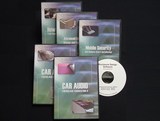
The Car Audio Help DVD catalog includes five different videos covering many areas of car audio installation and custom fabrication. Topics range from basic system installation (head units, amplifiers, speakers, etc.) and mobile security (car alarms and remote start) to subwoofer box design and fiberglass fabrication. If you're interested in custom fabrication and car audio installation be sure to check out what we have to offer.
Click here to see the discount DVD packages
Back to the Newsletter Archives Index